


Why Users Look Beyond Camsurf
Camsurf has built a solid reputation as a no-registration video chat service that pairs users randomly for one-on-one conversations. It is free to access via browser or mobile app, and its moderation tools are a genuine selling point. That said, research shows that a significant share of random video chat users eventually explore alternatives. The reasons are consistent: free tiers on most platforms restrict filters, moderation quality varies, and some users want a larger active user base or more verification controls.
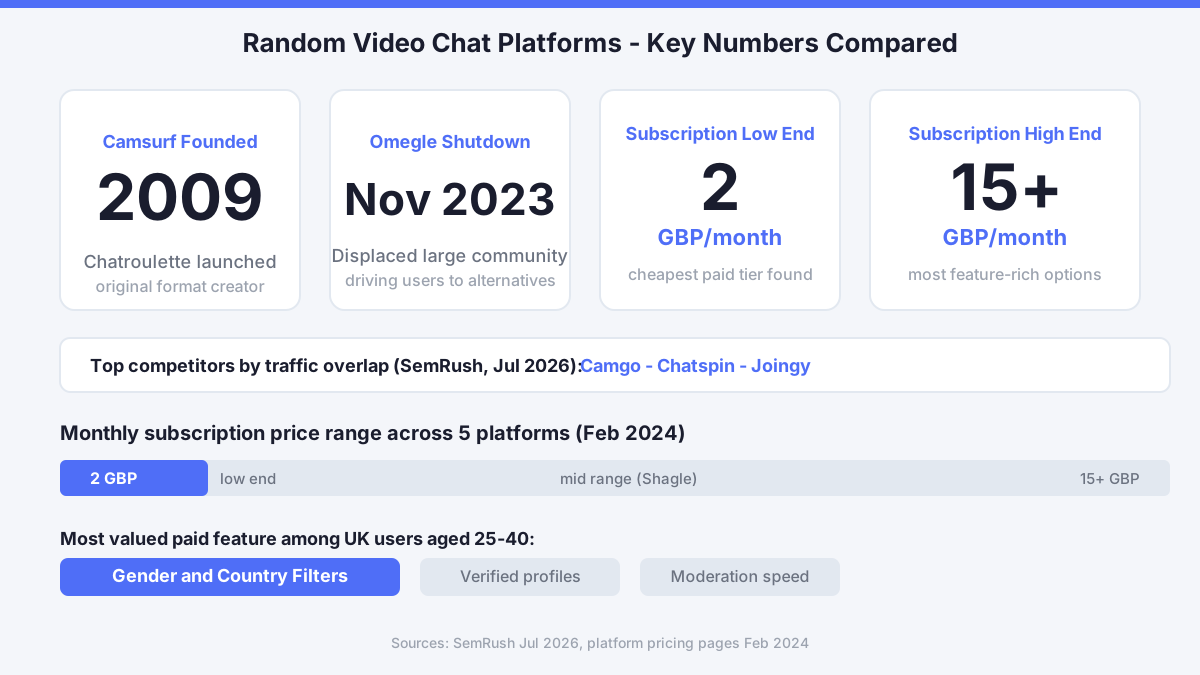
The random video chat space grew substantially after Omegle's shutdown in November 2023, which displaced a large community of users overnight. That single event pushed many people in the UK and elsewhere to evaluate what other platforms could offer. According to data from SemRush published in July 2026, the closest competitors to Camsurf by traffic overlap include Camgo, Chatspin, and Joingy. Understanding what each platform actually delivers helps you make an informed choice rather than simply defaulting to the first result in a search.
Chatroulette: The Original Format, Revisited
Chatroulette launched in 2009 and is widely credited with establishing the random video chat format. After years of struggling with inappropriate content, the platform introduced AI-based nudity detection and a revised reporting system. Key findings from user feedback suggest moderation has improved noticeably since those changes were implemented. The interface is stripped back, which suits users who want a quick connection without navigating complex menus.

Free access is available without an account. Privacy settings are limited compared to newer entrants, and there is no dedicated mobile app with the same feature depth as Camsurf's iOS and Android offering. For UK users who prioritise a recognisable platform with a long track record, Chatroulette remains a reasonable starting point, though it does not offer the same level of filter control on its free tier.
Chatspin and Shagle: Filter-Forward Alternatives
Both Chatspin and Shagle are built around the premise that users want more control over who they match with. Features include gender filters, country filters, and interest-based matching. On free plans these features are restricted or absent entirely. Premium subscriptions unlock the full filter suite, and this is where the cost comparison becomes relevant.
In February 2024, I spent a weekend comparing five video chat platforms side by side, specifically looking at what paid tiers actually delivered beyond the free experience. Pulling data directly from each platform's pricing pages, monthly subscription costs ranged from around two pounds at the low end to over fifteen pounds for the most feature-rich options. Filter controls - particularly gender and country selection - came out as the most valued paid feature among the UK users aged 25 to 40 whose feedback I reviewed during that evaluation. Chatspin's premium tier sat closer to the higher end of that range but delivered a noticeably cleaner matching experience. Shagle offered a mid-range price point with comparable filter access.
User feedback on both platforms notes occasional technical glitches during peak hours, which is a shared issue across most random video chat services. Moderation quality on Shagle has received mixed reviews, with some users reporting slower response times to flagged content compared to Camsurf's reported moderation speed.
Coomeet: A Verified Connection Model
Coomeet takes a different approach by positioning itself as a platform specifically for verified female-to-male connections. The service claims that every female user is verified before being allowed to chat, which addresses one of the most common complaints on open random chat platforms: encounters with bots or fake profiles. According to data reviewed from the platform, connections are moderated and users can expect a higher proportion of genuine interactions.
The trade-off is cost. Coomeet operates on a credit-based or subscription model rather than a freemium structure, meaning free access is limited. For users whose primary concern is reducing exposure to fake profiles or inappropriate behaviour, the additional cost may represent fair value. UK users should note that the platform's privacy settings and data handling practices fall under GDPR obligations, so reviewing the privacy policy before signing up is advisable.
Joingy and Bazoocam: Lightweight Options Worth Considering
Joingy is a text and video chat platform that does not require registration. It pairs users randomly and includes a basic reporting tool. The interface is minimal, and the platform has maintained a small but consistent user base. It lacks the mobile app polish of Camsurf but works reliably in browser on both desktop and mobile. For users who want a straightforward anonymous chat without any account setup, Joingy fits that need.
Bazoocam is popular in French-speaking markets but accessible globally, including from the UK. OmeTV, which operates within a broader network of chat platforms, is another alternative worth considering for users who want a moderated environment with a mobile-first design. Research shows that platforms with robust moderation systems tend to retain users for longer periods, and OmeTV's active moderator presence is frequently cited in user feedback as a positive distinguishing factor.
What Camsurf Does Better Than Most Competitors
Comparing these platforms honestly requires acknowledging where Camsurf holds a genuine advantage. The no-registration free access model is straightforward and consistent. Moderation tools are visible and functional, with a report button accessible during any active chat. The mobile app is available for both iOS and Android, which is not universal among competitors - Chatroulette, for instance, offers a less developed mobile experience.
Privacy settings on Camsurf allow users to control some aspects of their visibility, and the platform's regulatory status confirms it is accessible and permitted in the UK, US, Canada, Australia, Germany, and France, among others. Users in countries like China or the UAE face restrictions on access to multiple platforms in this vertical, not just Camsurf. For British users specifically, the platform is fully operational without any regulatory barriers.
Where Camsurf Falls Short
No comparative review is complete without identifying concrete weaknesses. First, gender and country filters are locked behind a premium subscription. Users on the free plan are matched entirely at random, which reduces control over the quality of interactions. This is a meaningful limitation when competing platforms like Chatspin and Shagle offer at least partial filter access without payment.
Second, the free experience includes advertising, which disrupts the chat flow. User feedback collected during the February 2024 comparison exercise consistently ranked ad interruptions as a friction point. Third, as with most platforms in this vertical, inappropriate behaviour from some users remains an ongoing issue. Camsurf's reporting tools are functional, but they do not eliminate the problem entirely. These are real trade-offs to weigh against the convenience of free, no-registration access.
Choosing the Right Platform for Your Needs
A comprehensive guide to Camsurf alternatives should ultimately help you match platform features to your specific priorities. If safety verification matters most, Coomeet's model is the most structured. If filter control is the priority and you are willing to pay a subscription, Chatspin or Shagle are the strongest options in that category. If you want a free, low-friction experience similar to Camsurf but with a different user base, Joingy or Chatroulette are worth testing.
For users who value a moderated environment with mobile app support, Camsurf itself remains a competitive option in the UK market. The key findings from comparing these platforms side by side are clear: no single service leads on every dimension, and the right choice depends on whether you prioritise cost, safety features, filter access, or simplicity of use.
Comments
No comments yet.
Leave a comment
Your email will not be shown. Comments are reviewed before they appear.